Michael Caine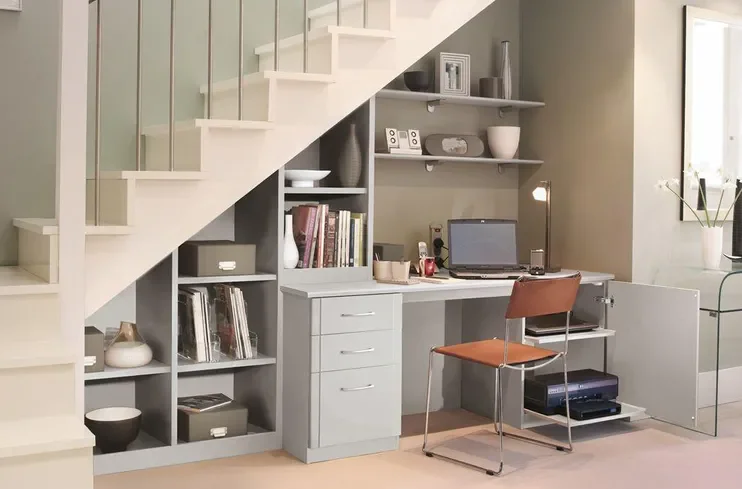
The area beneath a staircase landing often has an awkward mix of low ceilings, structural framing, and irregular corners. Under landing storage ideas make that difficult footprint useful through fitted cabinets, pull-out drawers, shelving, or compact utility zones designed around the space that actually exists.
Start With the Shape of the Cavity
Unlike a normal rectangular closet, the space beneath a landing may change height quickly. Accurate measurements are therefore more useful than choosing cabinets first and trying to make them fit later.
Mark the lowest usable height, deepest point, framing locations, and any utilities before deciding what should be stored there. A simple measured sketch can prevent expensive design mistakes.
Use Full-Depth Pull-Out Storage
Deep cavities are often frustrating because items placed at the back become difficult to reach. Large pull-out units solve that problem by bringing the entire storage compartment toward you.
Examples of space-conscious home layouts can offer useful inspiration when deciding between conventional doors and full-extension storage.
Tall pull-outs can hold cleaning tools, sports equipment, or household supplies if adequate headroom exists near the front.
Fit Cabinets Around the Landing
Custom or semi-custom cabinetry can follow the underside of the stair structure instead of forcing a standard rectangular unit into an irregular opening.
Looking at thoughtful room finishes can help you match doors, handles, paint, and trim with nearby architecture so the storage feels integrated.
| Approach | Works Well For | Main Challenge |
|---|---|---|
| Pull-out cabinet | Deep cavities | Hardware clearance |
| Hinged doors | Wide openings | Door swing |
| Open shelves | Books and decor | Visible clutter |
| Utility cabinet | Cleaning supplies | Ventilation needs |
Give Difficult Corners a Specific Purpose
Awkward storage performs better when each zone has one clear job. A low rear area might hold seasonal decorations, while the taller front section handles a vacuum, folding chairs, or sports gear.
Planning references focused on efficient household spaces can help when deciding which belongings deserve custom storage and which should be relocated elsewhere.
Lighting is worth considering too. A small interior light can make deep storage much easier to use.
Where Under-Landing Storage Often Fails
Trying to capture every cubic inch can make the cabinetry complicated and expensive. Tiny triangular compartments may technically add storage yet prove too awkward to use.
Access also matters more than volume. A huge cavity with a narrow doorway can be less useful than a smaller pull-out unit. Plumbing, wiring, ventilation, and structural supports should remain accessible where maintenance may eventually be required.
Frequently Asked Questions
What can be stored under a stair landing?
Cleaning equipment, seasonal items, shoes, sports gear, household supplies, luggage, books, or utility items can work depending on available height, ventilation, and access.
Are custom cabinets necessary for under-landing storage?
Not always. Simple shelves, freestanding bins, or modular units may work in open cavities, while irregular or highly visible spaces often benefit more from fitted cabinetry.
Should under-stair storage have ventilation?
Ventilation may be helpful when storing damp equipment, shoes, cleaning products, or anything that can create odors or moisture. Requirements depend on how the compartment is used.
Design for Access, Not Maximum Volume
The best under-landing storage doesn’t necessarily fill every corner. It makes useful items easy to reach while respecting the staircase structure and any building services nearby. Measure carefully, favor accessible drawers or cabinets, and leave impractical corners alone when necessary. A smaller storage zone that’s easy to use will usually outperform a larger one that’s difficult to reach.