Michael Caine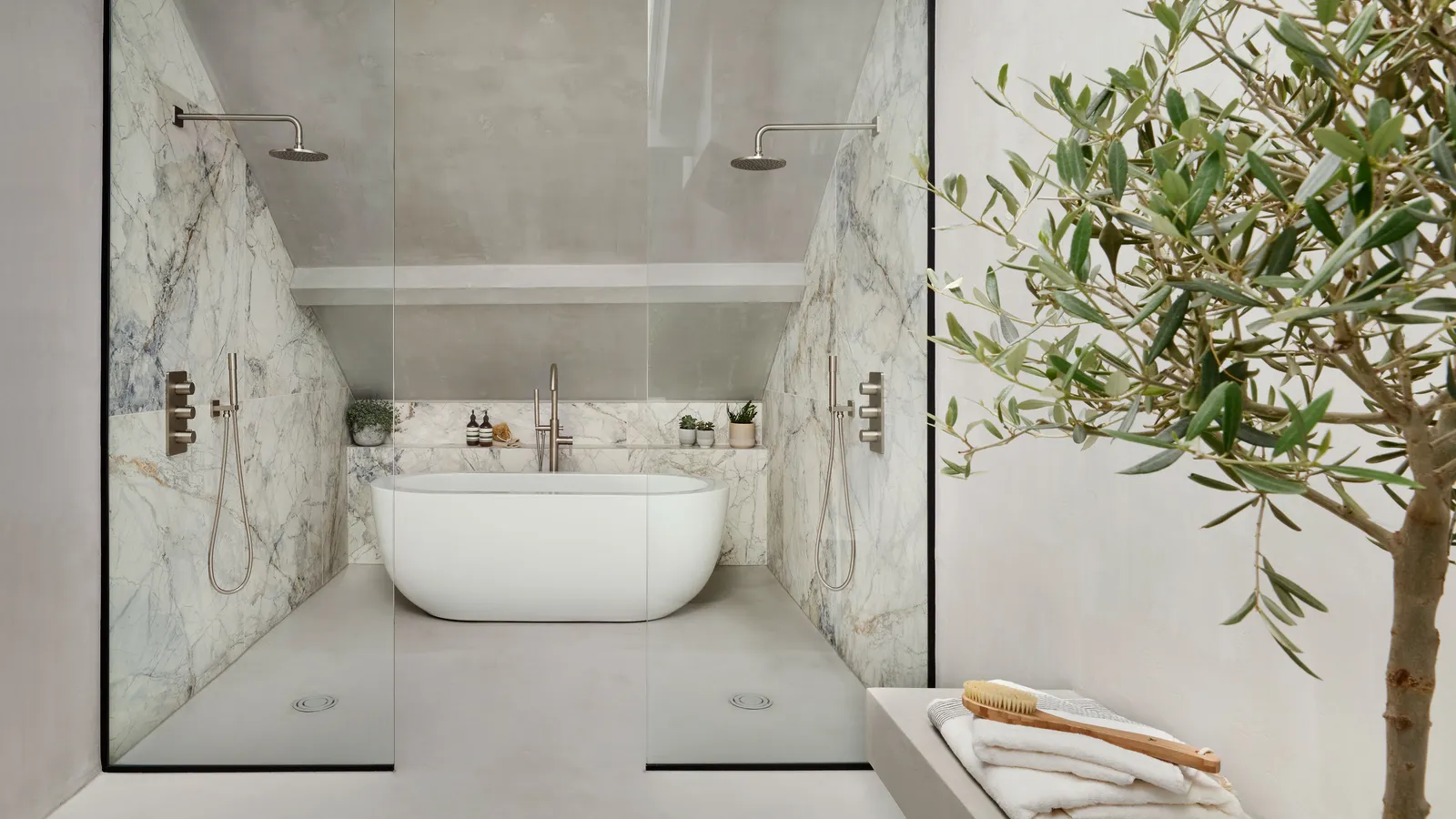
Tadelakt is closely associated with softly curved, continuous surfaces and a hand-finished mineral appearance. In wet-area design, that combination can create a calmer alternative to walls divided into repeated tile grids. Strong tadelakt finish ideas focus on proportion, color, detailing, and compatible construction rather than using the material simply because seamless bathrooms are fashionable.
Let Curves Emphasize the Finish
Tadelakt and rounded architecture naturally complement one another. Curved shower walls, arched niches, softened corners, and built-in ledges allow light to move gradually across the surface.
Straight walls can work well too, but curved details make the hand-worked character easier to notice. The material shifts gently from highlight to shadow without depending on decorative patterns.
This can be especially appealing in small bathrooms where too many grout lines and sharp transitions may create visual clutter.
Choose Colors With Natural Warmth
Soft chalk, sand, stone, clay, muted terracotta, and warm beige can strengthen the mineral quality of the finish. These colors also pair naturally with timber, stone, plaster, and aged metal.
When reviewing architectural inspiration sources, look at how warm colors behave next to water, reflective fittings, and natural light. Bathrooms contain many shiny elements, so the wall finish often benefits from remaining quieter.
Large samples are particularly useful because a color may look noticeably different once it wraps around several surfaces.
Plan Niches and Details Before Finishing
A seamless appearance depends heavily on early planning. Shower niches, ledges, transitions, fittings, and changes in plane should be considered before the final decorative work begins.
Interior layout references can help generate ideas for proportion and placement, although the final construction needs to suit the specific room and chosen finishing system.
| Design Detail | Visual Benefit | Planning Focus |
|---|---|---|
| Arched niche | Softer focal point | Proportion |
| Built-in ledge | Continuous line | Height and depth |
| Curved corner | Fewer hard breaks | Wall geometry |
| Recessed shelf | Cleaner storage | Waterproof detailing |
Good detailing keeps practical features from appearing as afterthoughts. That matters more in a minimal room because every interruption becomes easier to notice.
Keep the Room Warm Without Over-Styling It
Tadelakt is often associated with earthy interiors, but it doesn’t require a themed setting. Clean contemporary fittings can create an effective contrast with the softer wall surface.
Browsing comfortable home concepts may help with furniture and accessory balance. In a bathroom, simple timber stools, woven baskets, plain towels, and understated lighting are usually enough to add warmth.
Limit Decorative Competition
Bold patterned floors, several metal finishes, heavily veined stone, and busy accessories can all compete with tadelakt. One strong supporting material is usually more effective than several.
The wall should remain part of the architecture rather than becoming visual background noise.
What Seamless Design Doesn’t Automatically Solve
A wall that looks continuous still requires careful technical detailing. Seamless appearance should never be treated as a substitute for appropriate substrate preparation, waterproofing strategy, compatible materials, and skilled application.
Another misconception is that every surface needs the same finish. Sometimes a tadelakt shower area paired with a simpler painted wall creates better contrast and makes maintenance zones easier to understand. Visual continuity is useful, but total uniformity isn’t always necessary.
Frequently Asked Questions
Does tadelakt have to look rustic?
No. Minimal fittings, simple lighting, restrained colors, and modern sanitaryware can make the finish feel contemporary while preserving its softer handcrafted character.
Which colors work well with tadelakt?
Warm neutrals, clay tones, sandy beige, soft stone, muted pink, and off-white are common design directions because they complement the material’s mineral appearance.
Can tadelakt be used only inside showers?
No. It may also be considered for selected bathroom walls, vanity areas, niches, or other suitable surfaces, depending on the project and the finishing system being used.
Design the Details Before the Surface
The most convincing tadelakt spaces are resolved before the final finish begins. Decide where niches, curves, fittings, and transitions belong, then build a restrained palette around them. When the technical system and visual planning support each other, the finished wet area can feel warm, continuous, and intentionally simple.