
 Michael Caine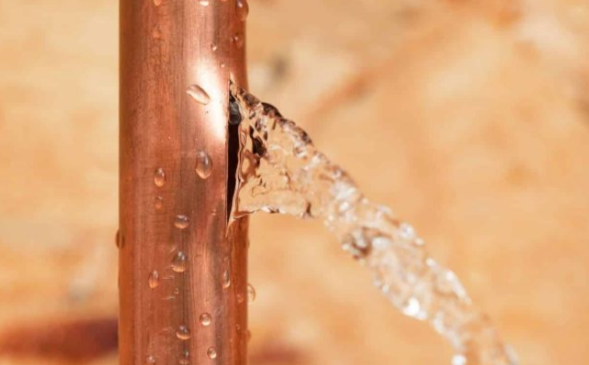
You can’t plan for a plumbing leak on a convenient weekend. As soon as water hits your walls, floors, and framing, the clock starts ticking – and the worst damage occurs during the hours before most people think to call.
The first hour matters more than you think
Water doesn’t just drop and sit there. Water is restless. It spreads horizontally through the structure in all surrounding areas. Through capillary action, it rises vertically up the studs, carries behind baseboards, soaks insulation, and eventually finds its way under finished flooring.
A damp spot on the ceiling or a wet corner of a room doesn’t indicate the full extent of the leak. It’s just the tip of the iceberg. Water can travel and spread through unseen areas 2 to 3 feet from the initial symptoms. It can penetrate through material that appears and feels dry on the surface. Anywhere inside the building envelope that wicks moisture is considered part of the spreading damage.
One of the first items to compromise is the underlayment. The plywood, OSB, or particleboard beneath ceramic tile or hardwood flooring will wick up moisture. By the time the material becomes saturated and begins to swell, the flooring may already be destroyed. Once the underlayment has reached this point, it can’t merely be dried out and saved. The floor covering will need to be removed, exposing the unattractive truth.
Why professional drying equipment changes the outcome
When most homeowners think about needing professional cleanup and restoration services, they conjure up mental images of fires, major floods, or catastrophic storm events. In reality, the most common reason for professional water damage response following a leaky roof or burst pipe is a need to access large capacity dehumidification and air movement equipment.
Most homeowners respond to a leak with towels, a wet-dry vac, and some fans. That approach handles visible surface water, but it doesn’t address the moisture inside wall assemblies, underneath flooring, or absorbed into structural framing. Left unchecked, this creates the perfect environment for mold. Once mold establishes a foothold, the cost equation for restoration and repairs shifts dramatically as hazardous materials removal becomes necessary.
Professional water damage response uses industrial dehumidifiers and air movers calibrated to the science of psychrometrics – the manipulation of temperature, relative humidity, and airflow to extract moisture from structural materials without causing thermal damage. These aren’t more powerful versions of hardware store equipment. They’re fundamentally different tools designed to dry materials in place rather than after demolition.
This is where the cost equation becomes clear. Drying materials in situ costs a fraction of what it takes to tear out rotted subflooring, replace saturated wall framing, and rebuild finished surfaces from scratch. The gap between those two scenarios is often measured in days, not weeks. For homeowners in the Pacific Northwest, connecting with Water Damage Restoration Seattle Wa professionals early means accessing that specialized equipment before the drying window closes.
How clean water becomes a biohazard
A plumbing leak begins as Category 1 – clean water from a supply line or fixture. However, if unaddressed, it can quickly escalate to a more dangerous category. Clean water becomes contaminated within hours as it mingles with drywall, adhesives, and insulation, along with any microscopic life forms that inhabit wall cavities. Contaminated water is then classified as Category 2, or gray water – the same category as discharge from washing machines or dishwashers. Gray water contains chemical and biological pollutants that can make people sick upon exposure.
If the source of water is from sewage or outdoor flooding, the damage is classified as Category 3, or black water. Black water poses an immediate biohazard risk and must be handled with protective gear and specialized disposal methods. Treating black water damage the same way you would a broken pipe under the sink endangers the health of everyone in the home.
The 24-to-48-hour mold window
Mold can potentially start growing within 24 hours of water exposure. The 48-hour guideline is only a general recommendation, and your results may vary. For that reason, if you suspect that water has been leaking into your walls for longer than 24 hours, you must assume that dangerous, potentially toxic mold may be present and take whatever precautions you feel are necessary.
The secondary damage most people don’t expect
Water damage doesn’t stay in one place. If you have a big leak in the living room, the drywall gets saturated. That’s a given. But the story doesn’t end there. The now-wet drywall wicks moisture upwards by capillary action. The wall next to the living room starts to get damp, and so does the base of the nearby wood-stud wall. It appears to happen “by magic” as if the moisture simply jumped from the wet drywall to the adjacent wall, but the explanation is simple: water wicks. It flows through porous material.
What to do in the first thirty minutes
Turn off the main water supply. Shut off electricity to affected rooms at the circuit breaker. Eliminate any standing water using mops, wet-dry vacs, or sponges. If it’s stopped raining, open windows to expedite the drying, and get any soaked rugs or furniture out of their wet environment.
The next step should be to contact a restoration pro. Not necessarily because the situation is dire, but because whether you’re facing a dry-out or rebuild often depends on what happens in the first 24 hours. Physics can be so inconvenient.