Michael Caine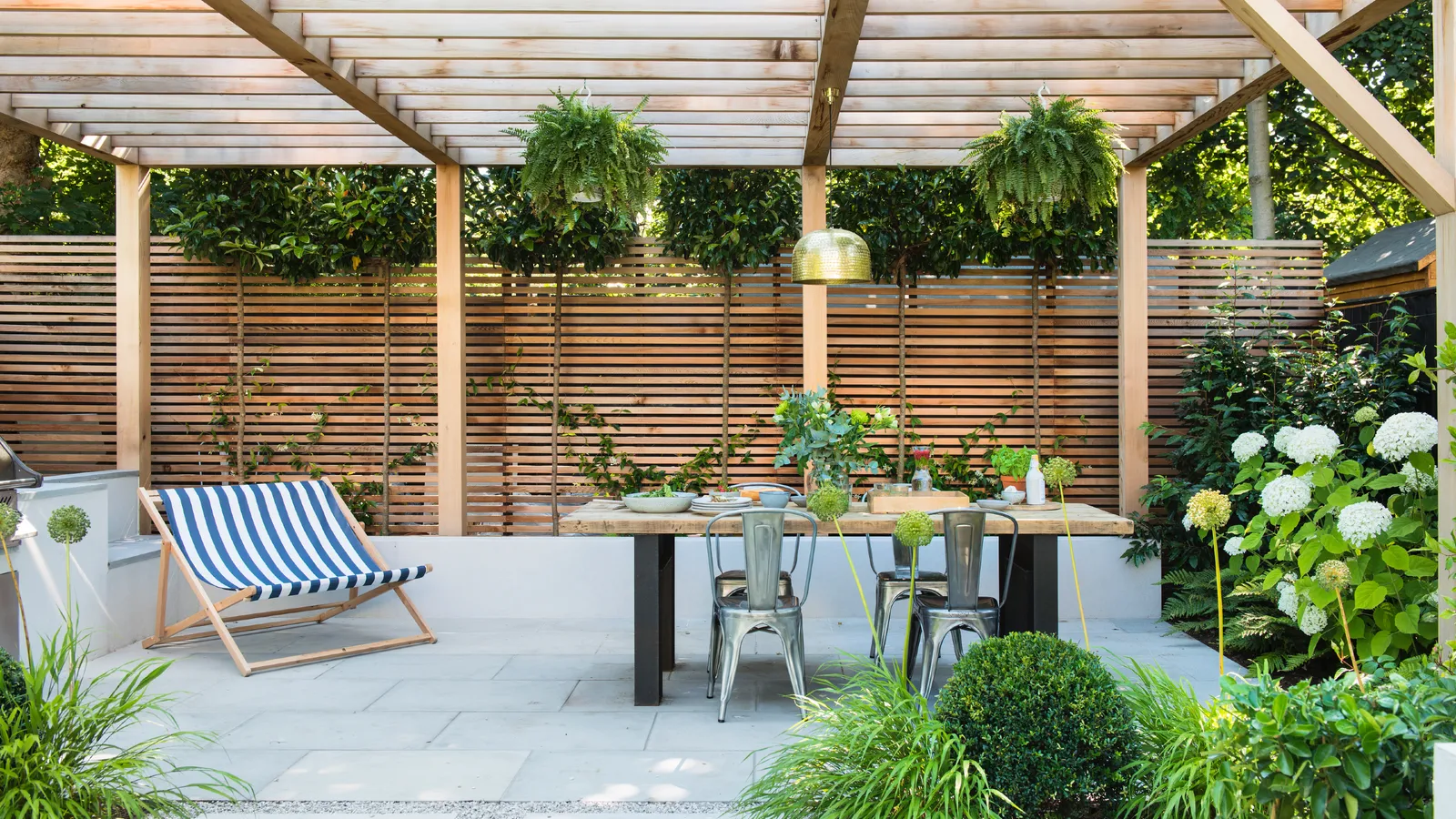
A pergola roof should make a patio more comfortable without removing the airy quality that makes outdoor living enjoyable. Useful pergola roof ideas range from spaced timber slats and climbing plants to retractable fabric and translucent panels.
The right choice depends on whether you want filtered shade, stronger sun protection, occasional rain cover, or a combination of all three.
Start With the Type of Protection You Need
Traditional open rafters soften direct sunlight but don’t create complete shade. Fabric systems provide more coverage, while solid or translucent panels can protect against rain as well.
Think about the main discomfort you’re trying to fix. A patio that becomes unbearably hot in late afternoon may need a different roof than one that mainly needs shelter from occasional showers.
Pay Attention to Sun Direction
Roof design should respond to the sun’s angle rather than appearance alone. Closely spaced slats can still allow significant sunlight through if they run in the wrong direction for the site.
Keep the Roof Visually Light
Heavy roofing can turn a graceful pergola into something that feels more like an extension. Open slats, narrow framing, lighter-looking panels, and climbing plants maintain a stronger connection with the sky.
Looking through patio and garden ideas can help compare roof coverage with planting, paving, seating, and the surrounding outdoor layout.
Keeping the support structure proportionate is especially important over smaller patios.
Compare Fixed and Adjustable Shade
Fixed slats are simple and architectural, but their shade pattern stays mostly consistent. Retractable fabric or adjustable louvers offer more control when weather changes through the day.
People exploring everyday home inspiration may prefer flexible systems because the patio can shift between sunny breakfast space, shaded afternoon seating, and a more open evening setting.
| Roof Option | Coverage | Main Tradeoff |
|---|---|---|
| Open rafters | Light shade | Little rain protection |
| Shade fabric | Moderate to strong | Fabric needs upkeep |
| Clear panels | Rain protection | Can trap heat |
| Adjustable louvers | Flexible coverage | More complex system |
Coordinate the Roof With the House
Pergola proportions should relate to nearby doors, windows, rooflines, and exterior finishes. A roof that sits too low may block views from indoors, while an overly tall structure can lose its sense of shelter.
Broader property upgrade considerations are also worth keeping in mind when attaching structures to a house, planning drainage, or considering future exterior improvements.
Water management becomes particularly important when using solid panels because runoff needs somewhere appropriate to go.
Where Pergola Roof Plans Can Fail
The most common error is expecting one roof material to provide every benefit. Clear panels stop rain but may increase heat. Dense shade fabric blocks sun but can make the structure feel darker. Open timber looks attractive but offers limited weather protection.
Ignoring wind exposure can also create problems with fabric panels and lightweight coverings.
Check structural requirements before adding substantial roofing to an existing pergola. A frame designed only for open rafters may not be suitable for heavier materials or increased wind loads.
Frequently Asked Questions
What pergola roof provides the most shade?
Solid panels, tightly arranged louvers, or dense shade fabric generally provide more shade than widely spaced rafters. Adjustable systems allow the amount of coverage to change.
Can a pergola roof keep rain out?
Some can. Solid roofing, suitable panels, and certain adjustable systems may provide rain protection when properly designed with flashing and drainage. Traditional open rafters won’t keep the patio dry.
How do I keep a covered pergola from feeling dark?
Use partial coverage, translucent materials, lighter framing, open sides, adjustable sections, or a combination of solid and open roof areas.
Choose Comfort Without Losing Openness
A pergola works best when it provides enough shelter while still feeling unmistakably outdoors. Start by identifying whether sun, heat, or rain is the bigger problem, then choose the roof system around that priority.
Avoid automatically covering the entire structure. Sometimes partial shade in the right location creates a more comfortable patio than a heavy roof stretching over every square foot.